
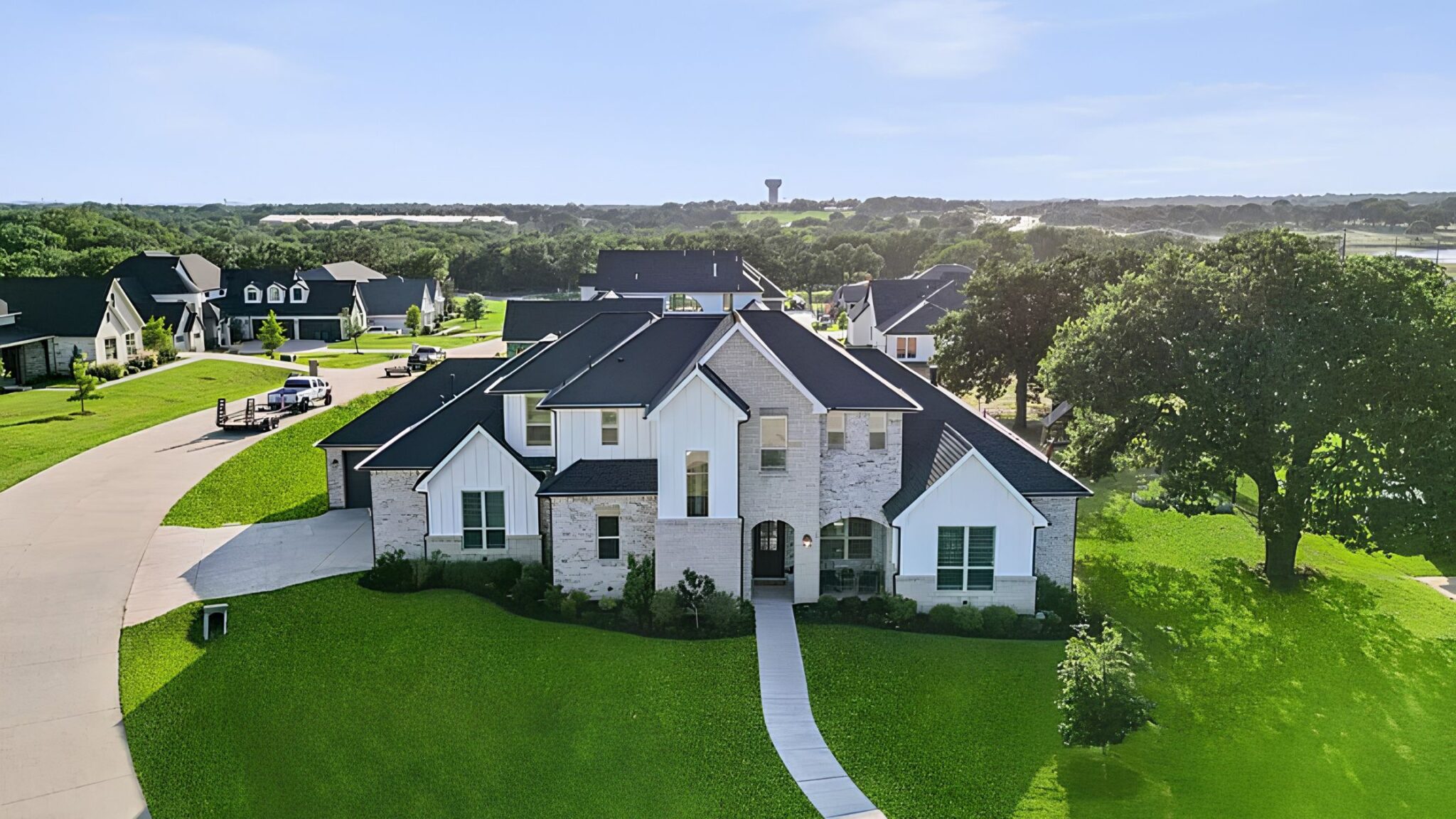
Designing a Flower Mound custom home is an exciting process, but I’ve watched people spend $12,000.00 protecting boxes they haven’t opened in 15 years…
Most folks designing a custom home never realize they’re about to spend tens of thousands of dollars storing things they don’t even use anymore. They walk into a builder’s office with a list of wants: Four bedrooms, oversized pantry, media room, three-car garage… but what they rarely think about is the stuff.
The furniture from the previous house. The boxes in the garage that haven’t been opened since the last move. The grandmother’s china hutch nobody has the heart to get rid of. The golf clubs, the holiday decorations, the kitchen gadgets used once a year.
All of it comes with them. And all of it needs somewhere to go.
Storage is one of the most common requests we get. But in 30-plus years of building custom homes in Flower Mound, Argyle, Bartonville and the surrounding areas, I’ve come to see it differently than most.
Because sooner or later, every family reaches the same moment:
“Are we building this part of the house for our life… or for the things we haven’t figured out how to let go of yet?”
That’s the real conversation, and most builders skip it entirely.
What We See When Designing a Flower Mound Custom Home
A couple comes out of a 5,200 square foot home and builds something closer to 3,500. On paper, that’s a sensible decision. Until they realize they’re trying to fit 5,200 square feet worth of living into something much smaller.
That’s when the storage requests start growing: Extra closets, conditioned attic space, oversized garages, built-ins everywhere. And underneath it all is usually the same quiet reality that nobody’s decided what’s actually important enough to bring into the next chapter of life.
Most builders never have the conversation. They’ll just keep adding square footage until the floor plan works. We don’t do that, because we’ve seen what happens when nobody asks the hard question upfront: homeowners end up building more house than they need, paying for it every single month, and still running out of space for the things that actually matter to them.
The hard question is this: is your stuff important enough to build around?
The Moment That Changed How I Think About Storage
I grew up modestly, and spent a lot of time with my grandmother as a kid. She lived in a house that was about 900 square feet for most of her adult life. I never thought much about it until she passed away and we went back to clean out her home.
By that point, I was already building big custom homes for a living. And I walked into her little house and realized something that stopped me cold.
She had everything she needed. Not everything she could have wanted, but everything she needed. It was all there, in 900 square feet.
Meanwhile, I was designing master closets that were almost as big as her entire home.
That moment has stayed with me, because it made me realize how easy it is for people to slowly start building around things instead of building around the life they actually want. And once that happens, the house starts getting bigger almost by accident.
The right builder will ask the right question: Does this still deserve space in your future?
Cheap Per Foot Doesn’t Mean Free
People tend to think of storage as the cheap part of a build. And compared to a kitchen or a master suite, closets and utility spaces are relatively economical per square foot.
However, every extra square foot of storage still needs a foundation underneath it, framing around it, drywall, a roof, insulation, and in Texas, air conditioning. Add it all up and extra storage space runs $10,000.00 to $12,000.00 before you’ve put a single shelf in it.
Folks think they’re just adding a little extra room, when what they’re really adding is:
- more property tax
- more utility costs
- more maintenance
- more square footage to clean
- and more long-term expense tied to things they may not even care about five years from now
And those costs follow you every year, for as long as you own the property.
Now weigh that against the alternative. In a lot of cases, building a modest dedicated storage space inside your home works out cheaper than renting an off-site storage unit over the same period, and it’s a lot more convenient. So storage can absolutely make financial sense. The question is always: storage for what, and how much?
Three Questions Worth Sitting With Before You Finalize a Floor Plan
1. If you didn’t already own it, would you bring it into your next home?
That’s usually where people get quiet. Because deep down, they already know the answer for a lot of the things they’re storing. I’m not saying everything has to go. Some things absolutely deserve a place in the home:
- family heirlooms
- meaningful collections
- things tied to real memories
But I’ve also watched people build expensive square footage around things they kept out of guilt more than love. That’s an expensive emotion to pour concrete around.
2. Is this item worth the ongoing cost of building around it?
The grandmother’s china hutch is a fair example. Maybe it’s a genuine family heirloom that deserves a dedicated space. Maybe it’s something everyone feels obligated to keep but nobody actually loves. Only you can answer that. But it’s worth answering before it drives a design decision worth thousands of dollars.
3. Am I building a home for the life I want, or the stuff I have?
A custom home should support the life you want to live going forward, not function like a climate-controlled storage unit for every season of life that came before it. Sometimes those two things overlap beautifully. Sometimes they don’t. The builder’s job is to help you tell the difference.
What a Good Builder Actually Does Here
A good custom builder doesn’t just take your wish list and price it up. They dig into it. They ask what you’re keeping, what you’re letting go, and what your life actually looks like day to day. They challenge you when the floor plan doesn’t match the answers you’re giving them.
That means some conversations are uncomfortable. You might hear no, or at least not exactly. That’s not a builder being difficult. That’s a builder protecting you from spending hundreds of thousands of dollars emotionally instead of intentionally. Because once construction starts, momentum takes over.
Every upgrade feels small at that moment… Until one day you’re standing in a house that got bigger one “might as well” decision at a time.
The goal is always the same: the right amount of house for the life you’re building, not more, not less, and not a single square foot wasted on stuff that should have been donated three moves ago.
Bottom Line: Build A Beautiful Home.
Just Make Sure It’s Serving Your Life Instead Of Your Leftovers.
A forever home shouldn’t feel like a list of compromises you learned to live with. It should feel like somewhere you actually wanted to end up.
Getting there means being honest about what you’re bringing with you, what you’re leaving behind, and what kind of life you’re designing for. When you do that work upfront, the floor plan follows naturally. And the home you build is one you’ll be glad you built.
To help Texas homeowners avoid the biggest and most expensive mistakes we see during the building process, I put together a free guide:
The Texan Home Building Playbook
Inside, you’ll find the 8 most common and costly traps to avoid when building a custom home in Texas, and how to make sure you get the home you actually want, with none of the stress you don’t.
Grab your free copy here and start your build on solid ground.
Read about the journey of Victor. Victor Myers Custom Homes proudly partners with NAHB, TAB, and Dallas BA.
*Disclaimer: Names and identifying details have been changed to protect the privacy of individuals. These stories are based on real events, and any resemblance to actual persons is coincidental.*

