
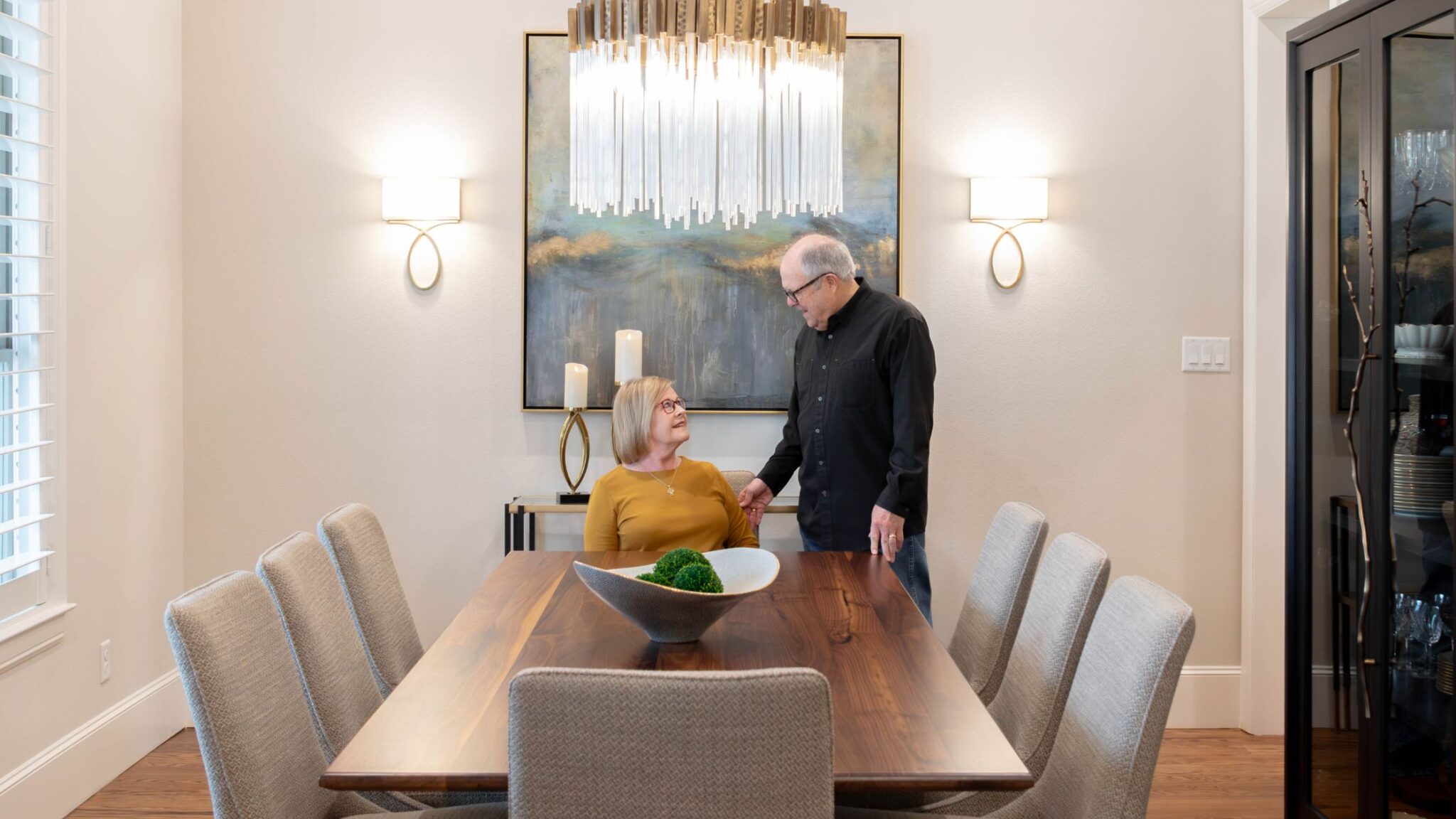
Forever home design sounds simple on the surface. You build once, and the house works for the rest of your life.
I’ve had some version of this conversation hundreds of times…
A couple will sit down with me, usually folks in their late 50s or early 60s. They’ve raised their kids in a house that worked for that season of life, but now things have changed. The kids are gone, or close to it, and they’re ready to build something that fits this next chapter a little better.
They’re excited and they should be. Most of the time, they’ve been thinking about this for years.
But as we start walking through their ideas, I can usually see a few things taking shape. Not necessarily mistakes, just decisions being made based on how life looks today, without really thinking through how that same house is going to feel ten or fifteen years from now.
That’s just human nature. You design around what you know. The challenge is, the house you’re building is going to outlast the version of life you’re in right now.
So when we sit down to design a home like this, there are a handful of decisions we always slow down on. They seem small at the time, but they tend to be the ones folks come back to later and wish they had thought through a little further.
Where Bedrooms and Bathrooms
Start to Work Against You
One of the first places this shows up is in how bedrooms and bathrooms are laid out.
When kids are young, everybody wants them close. Same hallway, maybe even sharing a wall with the primary bedroom so you can hear what’s going on at night. That’s a very normal setup, and for a while, it works great.
But then those same kids turn into teenagers, and having that bedroom right next to yours is not always what folks want anymore.
So we’ll talk through that from both ends. What does this feel like when they’re little, and what does it feel like when they’re older, because those are two very different experiences in the same house.
Then a few years go by, and now you’re empty nesters.
But here’s something we see all the time: you become an empty nester, and then you get that nest back. A kid moves home for a while. Maybe it’s after college, maybe it’s between jobs, maybe life just takes a turn. And now you’ve got adults living in a house that was designed for two people.
That’s where things like shared bathrooms start to matter in a different way. It’s not a big issue when the kids are younger, but it becomes a very real issue when everybody’s an adult.
Those are the kinds of things that are easy to think through when you’re still drawing lines on paper. After the house is built, your options get a lot narrower.
The Features That Don’t Age Well
Another place folks can get tripped up is with features that are built around one specific stage of life.
We’ve done some really fun things over the years, like attic treehouses with ladders going up into them, indoor slides, and rock climbing walls to name a few. And for a while, those get used exactly the way you’d hope.
But kids grow out of things faster than people expect. And now that feature is still there, it just doesn’t have a purpose anymore.
At that point, you’ve got two choices: you either live with it, or you spend the money to tear it out or rework it into something else. Most folks don’t think about that second cost when they’re making the decision the first time.
It’s not that those ideas are bad. You just want to ask one simple question before you commit to something like that: What does this become later?
If there is a clear answer, great. If there’s not, that’s worth knowing upfront.
Planning for Things You Hope You Don’t Need
Then there’s the side of design that nobody really wants to think about, but it comes up more often than you would expect.
A lot of the homes we build, probably about 75 percent, are for empty nesters. And when someone tells me they’re building their forever home, we take that seriously. That means we’re not just thinking about how the house works today, but also how it holds up over time.
Mobility is a big part of that.
Most folks are healthy when they’re building, so it doesn’t feel relevant to talk about walkers or wheelchairs or anything like that. But we’ve seen enough over the years to know that life can shift.
My parents’ house is a good example. It wasn’t one I built, and it had two-foot-wide doors throughout. When my mother needed a walker, we had to go back in and reframe and restructure parts of that house just to make it work for her.
That’s not a small fix. It’s expensive, disruptive, and could’ve been avoided with a little more foresight on the front end.
Same thing with steps inside the home. A small change in elevation might not seem like much at first, until years go by and you’re stuck figuring out how to build ramps into a finished house.
So when we’re designing, we’ll build in things that don’t really change how you live today. Things like wider doorways, a little more hallway clearance, blocking in the walls where grab bars might go someday, and layouts that don’t rely on steps to move between main areas.
And it’s not just about you. It might be an aging parent who comes to stay, or one of the kids who bounce back. You may never need any of it. But if you do, you’ll be very glad it’s there.
The Conversations Most Builders Never Bring Up
Every once in a while, a client will bring up something you don’t hear very often in design conversations.
Hearing loss is one of those.
In one case, a homeowner was already dealing with it. In another, they’d seen it in their family and wanted to be prepared if it became a factor later on. There are design choices that can help with that, like how rooms are proportioned, how sound moves through the space, and materials that affect how clearly people can hear each other.
It’s not complicated to account for, but it’s also not something most people think to raise unless they’ve experienced it firsthand.
Those kinds of conversations don’t come up in every project, but when they do, they tend to follow the same pattern as everything else: straightforward to address when you’re planning, but much harder to adjust after the fact.
What This Looks Like Ten Years Later
None of these decisions feel like a big deal when you’re sitting at the design table.
Where it shows up is later, in spaces that don’t get used the way you thought they would, or when someone moves back in and the house doesn’t quite handle it. And it shows up when something changes physically, and now you’re working around the way the house was built instead of it working for you.
At that point, you can still fix it. It just costs more, takes more time, and it usually comes with a lot more disruption than folks were expecting.
Most of it traces back to decisions that made sense at the time, but weren’t thought through quite far enough.
Before You Finalize Your Forever Home Design
When someone tells me they’re building their forever home, what I hear is that they want a house that’s going to keep working as life changes.
So before you lock anything in, it’s worth slowing down and asking a few extra questions about how the house will hold up if things shift a little, because they inevitably do.
If you want help thinking through that before you break ground, I put together a free guide that walks through the most common mistakes we see and the questions folks don’t always think to ask early on:
Download The Texas Home Build Playbook here.
Inside, you’ll discover:
- The 8 most common (and costly) mistakes folks make when building, and how to avoid every single one
- How to make sure your quoted price is actually the final price (no hidden extras or budget blowouts)
- The design tools we use to prevent layout regret, so your home feels exactly how you imagined
- What great builders do differently (and how to spot the warning signs early)
- How to avoid timeline delays, last-minute decisions, and the stress that comes with a disorganized build
- What most contracts leave out, and how to protect your budget from the start
- Why comfort and efficiency matter just as much as finishes – especially here in Texas heat
Grab your free copy before you finalize your plans. I’d hate for you to be the one calling me ten years from now, wishing you’d had this conversation a little earlier.
Read about the journey of Victor. Victor Myers Custom Homes proudly partners with NAHB, TAB, and Dallas BA.

